
maPS
Bio-Activate™ MAPS
Bio-Activate™ MAPS is a next-generation multinutrient fertilizer utilizing patented Niha Corp USA technology.
By integrating Bioactive Sulfur and an acclimatized microbial consortium, it prevents phosphorus fixation and accelerates nutrient uptake.
Nitrogen (N)
9%
Phosphorus
46%
Bioactive S
5%
Microbes
10³/g
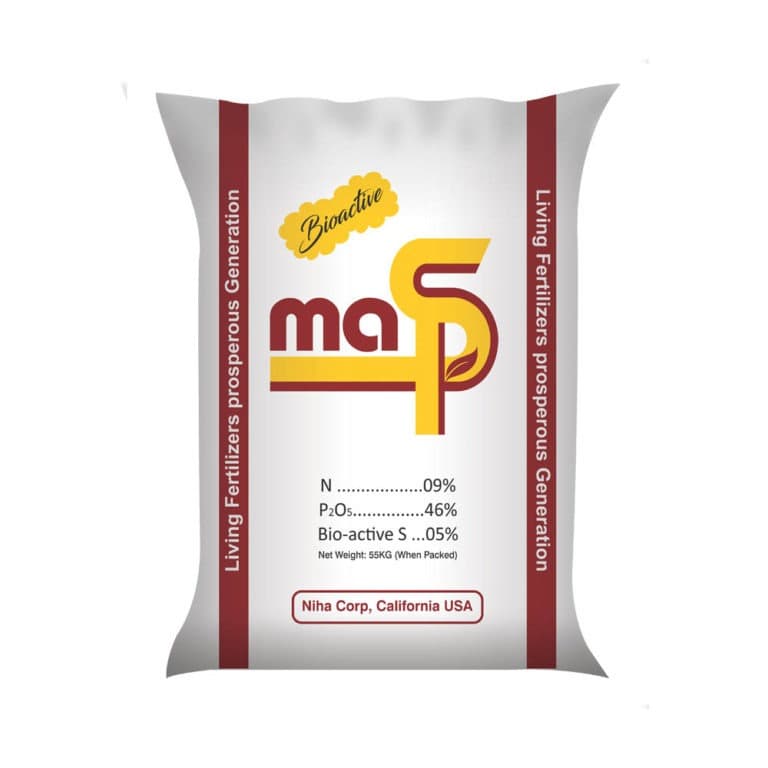
Acidic, Basal Multinutrient Fertilizer
Bioactive MAPS is a high-performance fertilizer featuring organically encapsulated, micronized Sulfur and Zinc. Utilizing patented bioactivation technology, it ensures the continuous release and availability of micronutrients while preventing soil fixation.
Its synergistic microbial-nutrient matrix optimizes N-P-S-Zn bioavailability, enhancing root architecture and yield. This activated formulation optimizes soil health, ensuring superior nutrient availability and significantly higher crop yields compared to traditional MAP.
Complete Nutrient Profile
- Nitrogen9%
- Phosphorus46%
- Bioactive Sulfur5%
- Microbial Load10³ Acclimatized Microbes/g
Performance Advantages
This synergistic blend of essential nutrients and microbial stimulants optimizes soil health, driving significantly higher yields than conventional fertilizers.
Prevents Fixation
By integrating Bioactive Sulfur and an acclimatized microbial consortium, it prevents phosphorus and micronutrient soil fixation.
Accelerated Uptake
Accelerates nutrient uptake and ensures the continuous release and availability of micronutrients.
Optimizes Bioavailability
Synergistic microbial-nutrient matrix optimizes N-P-S-Zn bioavailability for the plant.
Root Architecture
Enhances root architecture and establishes a stronger foundation for the crop's development.
Soil Health
This activated formulation optimizes soil health through organically encapsulated, micronized Sulfur and Zinc.
Superior Yields
Ensures superior nutrient availability and significantly higher crop yields compared to traditional MAP.